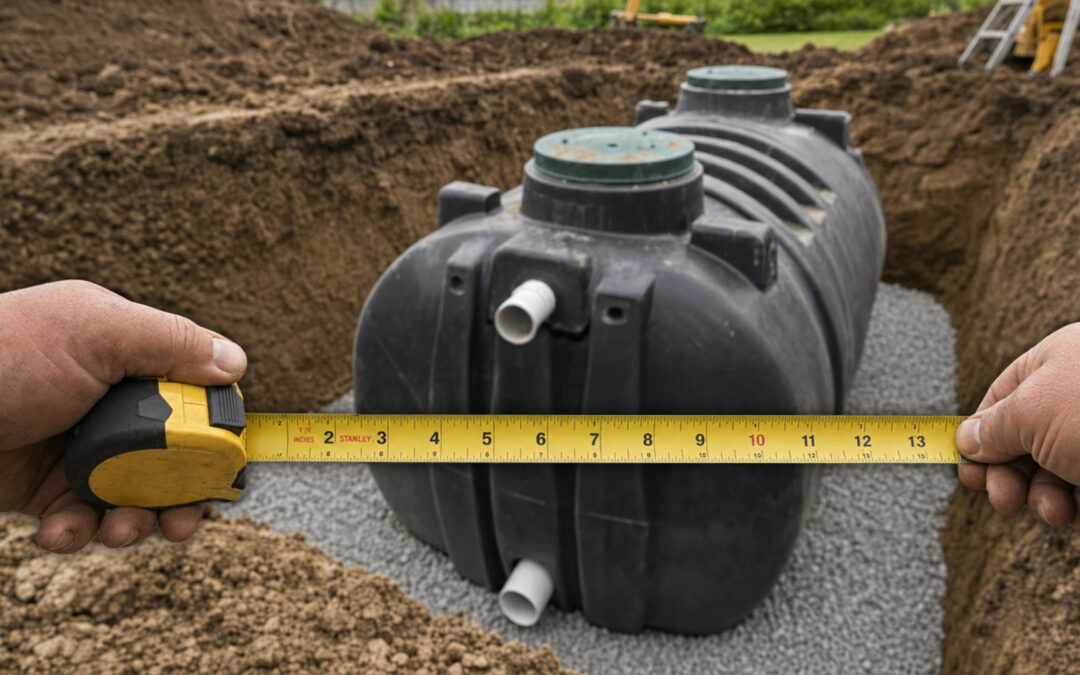
Picking a septic tank size isn’t something you want to eyeball.
Go too small, and you’re asking for trouble. Backups, more frequent pumping, drain field headaches, repairs nobody wants to pay for. Go too big, and you’re paying for more tank than your place actually needs.
So what size septic tank do you need? For most homes we work on here in Southwest Missouri, the answer lands somewhere between 1,000 and 1,500 gallons. But your number depends on how many bedrooms you’ve got, how much water your household uses, what your property looks like, and what your county requires.
If you’re building new, replacing an old tank, adding a bedroom, or buying a place with a septic system already in the ground, get the size right before anyone breaks ground. Septic problems aren’t known for being polite. They show up wet, smelly, and always at the worst possible time.
How We Size a Septic Tank
When we size a tank, we’re working off gallon capacity, and for homes, that starts with bedroom count.
Might sound strange at first. You’d think bathrooms or square footage would matter more. But bedrooms give us a better read on how many people could live in the house, not just how many live there today. A 4-bedroom house might have two people in it now, but the next family could have six, with more showers, more laundry, more flushes.
That’s why bedroom count is our starting point. It’s not the whole story, though. Soil, drainage, water table, and your local health department’s rules all play into the final number. We confirm your tank size on your property before anything gets installed.
Septic Tank Size by Number of Bedrooms
Here’s a general breakdown of what most homes in Southwest Missouri may need. Treat it as a starting point, not the final word.
1 to 2 Bedrooms
A smaller home usually runs 750 to 1,000 gallons, depending on your county’s rules and how your property’s laid out. Most of the time, we’re still installing a 1,000-gallon tank as the practical minimum for a full residential system.
3 Bedrooms
This is where we land most often. A 1,000-gallon tank covers a lot of 3-bedroom homes across Southwest Missouri.
4 Bedrooms
Plan on 1,250 to 1,500 gallons, depending on your water use and what your site allows.
5 Bedrooms
You’re looking at 1,500 gallons or more. More bedrooms usually mean more water running through the system, so both the tank and the drain field need to be sized to keep up.
6 or More Bedrooms
We’re typically talking 1,750 to 2,000 gallons or more, depending on your property and how the system’s designed.
Again, this chart gets you in the ballpark. It doesn’t replace us actually walking your property. Your soil, slope, water table, and local code can all move that number.
Why the Right Septic Tank Size Matters
Your tank’s got a job to do. Wastewater comes in, solids settle to the bottom, grease and scum float to the top, and the liquid moves out to your drain field. Size it right, and it’s got the room and the time to do that job the way it’s supposed to.
Undersize it, though, and you’ll feel it fast. That can lead to:
- More frequent pumping
- Slow drains
- Sewage backups
- Bad odors
- Solids escaping into your drain field
- Drain field strain
- Early system failure
Your drain field’s built to handle liquid, not the extra solids that slip out of an overworked tank. Once that field gets clogged or overloaded, you’re looking at real money to fix it.
That’s why we take sizing seriously on every septic tank installation. Get it right, and you’re protecting your home, your yard, and your wallet.
But bigger isn’t automatically better either. A tank that’s larger than you need costs more upfront and might not fit the rest of your system’s design. We’d rather size it right than sell you more tank than you need.
What Else Affects Septic Tank Sizing?
Bedroom count gets us started, but a few other things factor in:
Household Water Use
Long showers, back-to-back laundry loads, heavy daily use, it all adds up and puts more demand on your system.
Garbage Disposal
Running a disposal sends more solids into the tank, which affects how often you’ll need septic tank pumping and how hard the system has to work.
Soil and Drainage
Your property’s soil decides how well wastewater moves through the drain field. Southwest Missouri properties vary a lot here. Some soil drains great, some doesn’t, so your site matters as much as the chart.
Water Table and Slope
A high water table or a sloped lot can change how we design and place your system.
Local Requirements
Your county’s rules on tank size, drain field design, and installation details are non-negotiable, and they can differ from the next county over.
Future Plans
Thinking about adding a bedroom, finishing the basement, or expecting more people in the house down the road? Tell us now. It’s a lot easier to plan for that before we install than to dig up your yard later.
If you’re dealing with a system that’s already in the ground and you’re not sure it’s sized right, especially if you just bought the place, a septic inspection will tell you what you’re actually working with.
FAQ About Septic Tank Sizes
What size septic tank do I need for a 2-bedroom house?
Plan on 750 to 1,000 gallons, though most full residential systems still land on 1,000 gallons as the practical minimum.
What size septic tank do I need for a 3-bedroom house?
A 1,000-gallon tank covers most 3-bedroom homes we work on, though your final number depends on local code and your property.
What size septic tank do I need for a 4-bedroom house?
Usually 1,250 to 1,500 gallons. Worth confirming before installation if you use a lot of water or your property has drainage concerns.
What happens if a septic tank is too big?
You’ll pay more upfront for a tank you don’t need, and it might not match the rest of your system’s design. The right size beats the biggest size, every time.
How many people is a 1,500-gallon tank good for?
It’s common for larger homes, think 4 to 5 bedrooms, but the real answer depends on water use, local rules, and how the rest of the system’s built.
Not Sure What Size Septic Tank You Need?
Guessing at septic tank size isn’t a great plan. The right system depends on your home, your property, and how much wastewater it actually needs to handle.
If you’re building, replacing an old tank, adding bedrooms, or bought a place with a system you don’t know much about, give us a shout.
Not sure what size septic tank your home needs? Austin’s Pumping & Plumbing can help you understand your options, check your system needs, and make sure your septic tank is sized and installed the right way from the start.
Contact Austin’s Pumping & Plumbing at (417) 987-9914 for a free consultation.